How to Automate TradingView Alerts with Controlled Broker Execution
An alert can become a controlled broker action. Here is the sequence, step by step.
What an alert is
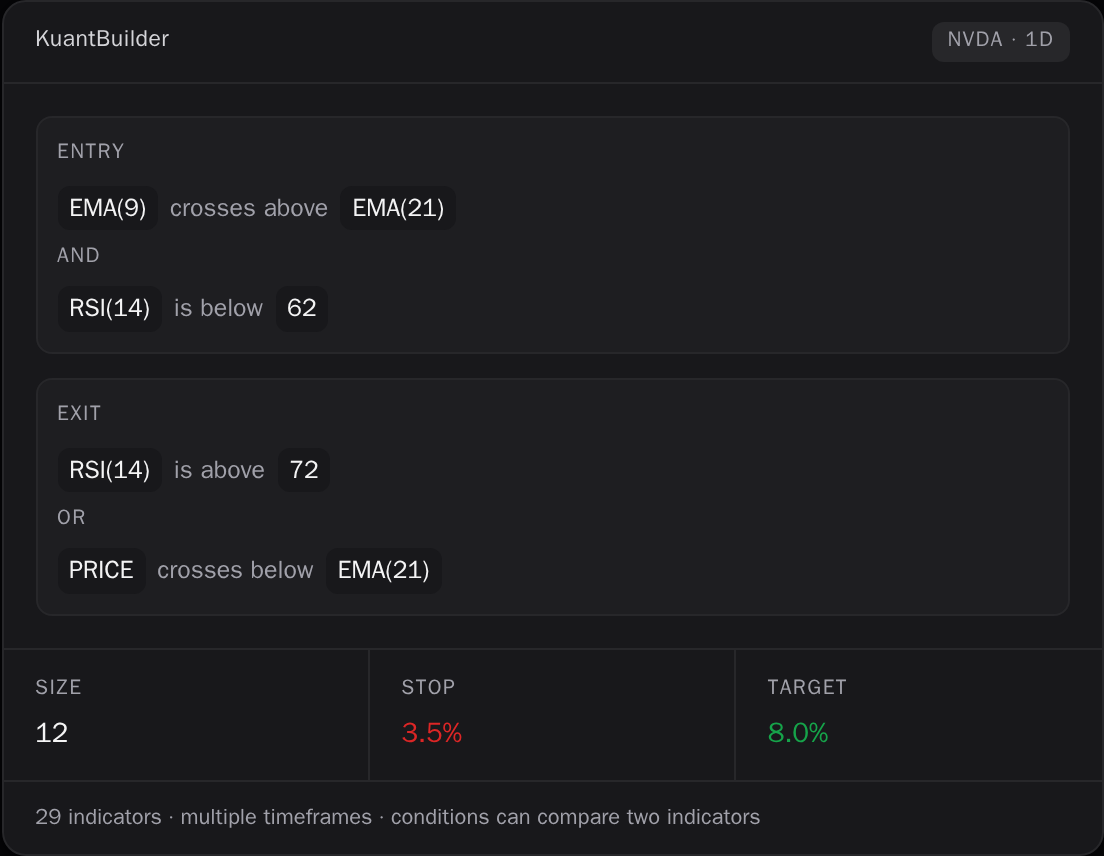
An alert on its own is a statement about the market, not an instruction to trade. What turns one into the other is a set of rules written in advance, evaluated the moment the alert arrives, and applied the same way every time. That is the part most descriptions leave out, and it is the part that decides whether automation is something you control or something that happens to you. The sequence is deliberate: the alert is received, the conditions are checked against the definition you saved, the size is resolved from the configuration rather than from the alert, and only then is anything sent onward. Each step is observable, and each one can refuse.
What happens next
An alert can become a controlled broker action [vocab]. An alert on its own is a statement about the market, not an instruction to trade. What turns one into the other is a set of rules written in advance, evaluated the moment the alert arrives, and applied the same way every time. That is the part most descriptions leave out, and it is the part that decides whether automation is something you control or something that happens to you. The sequence is deliberate: the alert is received, the conditions are checked against the definition you saved, the size is resolved from the configuration rather than from the alert, and only then is anything sent onward. Each step is observable, and each one can refuse.
- The alert arrives.
- Your saved conditions are evaluated.
- Size comes from the configuration, not from the alert.
Staying in control
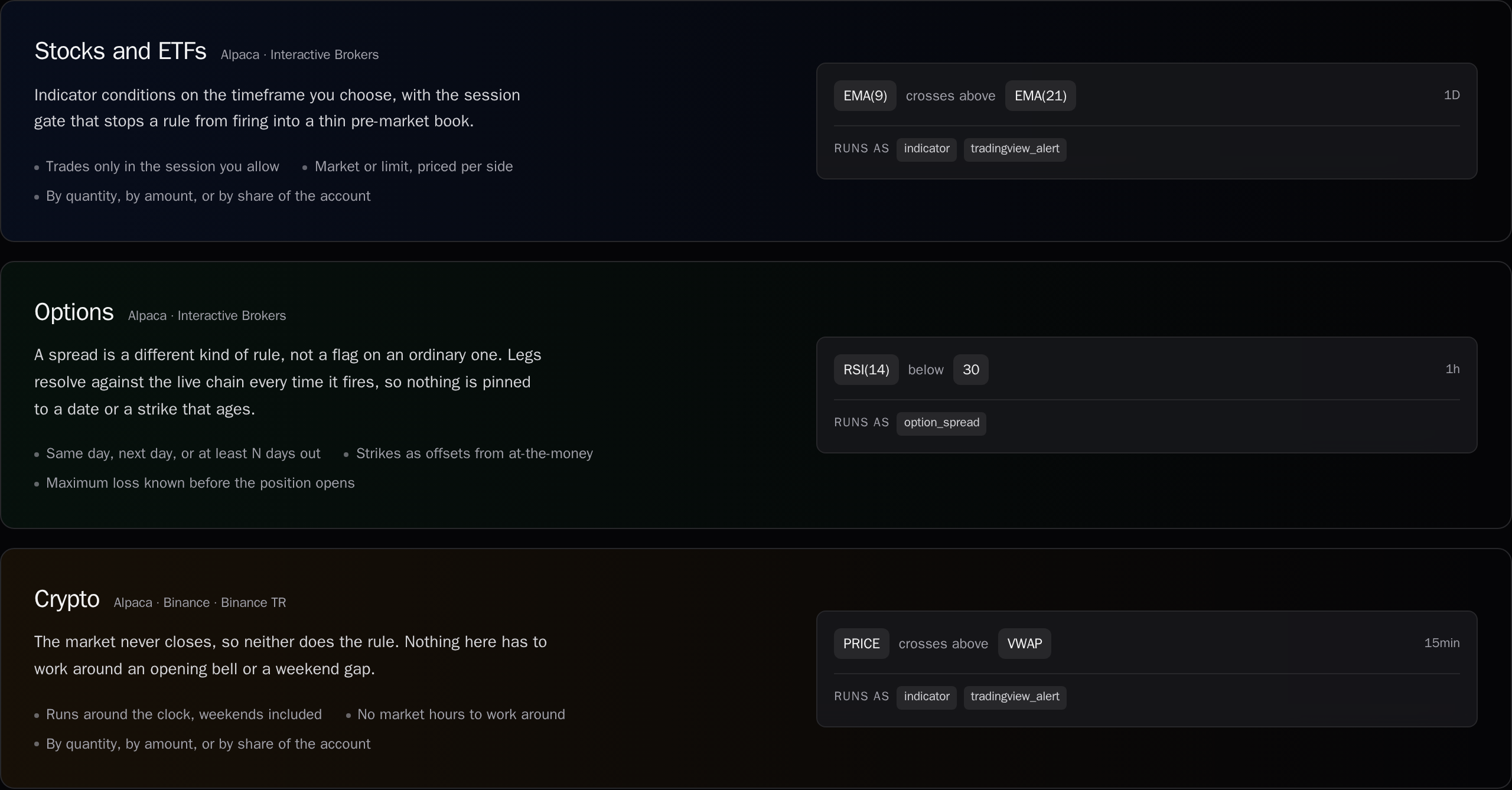
An alert on its own is a statement about the market, not an instruction to trade. What turns one into the other is a set of rules written in advance, evaluated the moment the alert arrives, and applied the same way every time. That is the part most descriptions leave out, and it is the part that decides whether automation is something you control or something that happens to you. The sequence is deliberate: the alert is received, the conditions are checked against the definition you saved, the size is resolved from the configuration rather than from the alert, and only then is anything sent onward. Each step is observable, and each one can refuse.
Does an alert place an order by itself?
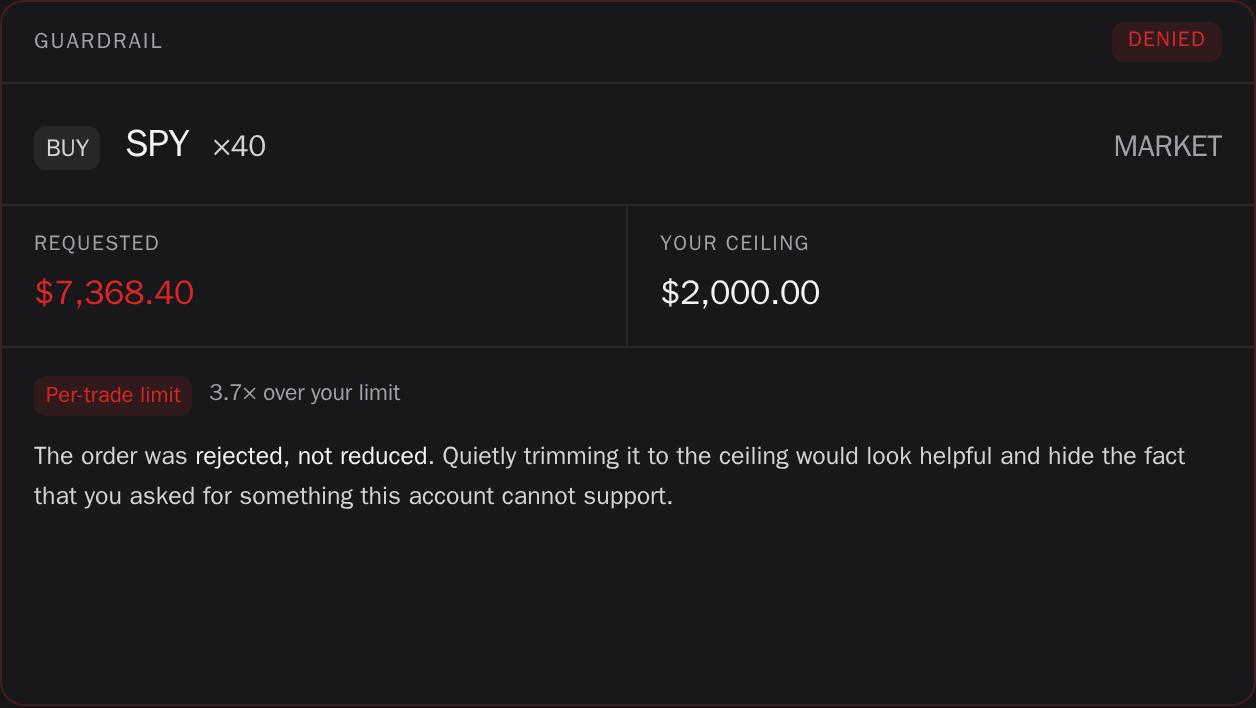
No. It is evaluated against the conditions you saved first.
Sources
- [vocab] KuantTrade engine vocabulary