KuantOptions
Options rules that do not expire with the contract
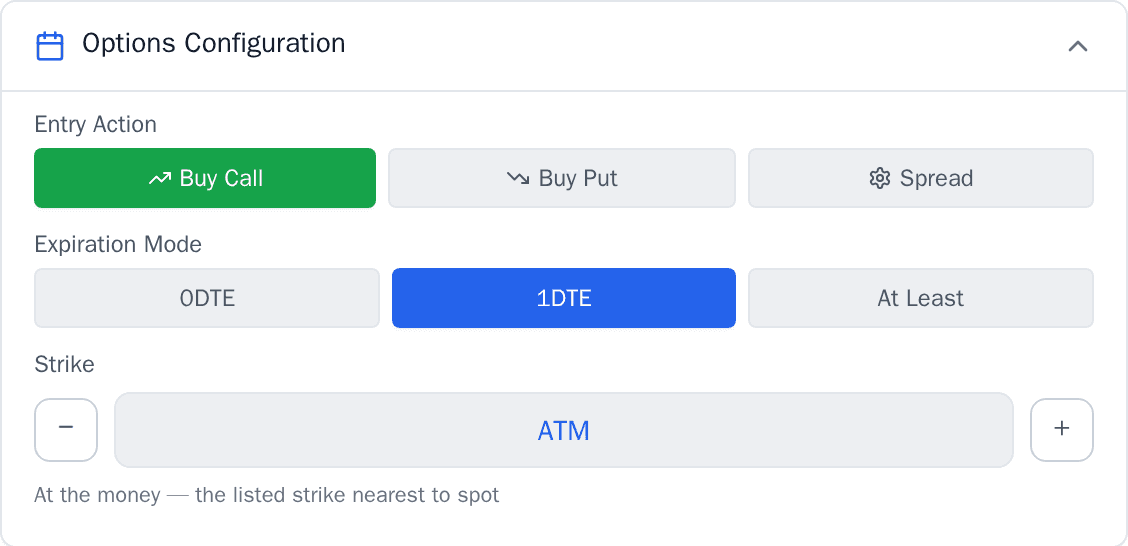
Say what you want in the terms the market actually uses, and the rule resolves itself against the live chain every time it fires. No dates to keep updating, no strikes to retype.
The expiry rule
An expiry is a question, not a date
Same day and next day are dates a calendar can produce. "At least nine days out" is not: which listed contract satisfies it depends on what the chain lists that morning, and the answer moves every week.
So the rule asks it again on every fire. One definition, unchanged, selecting a different real contract each time and landing at the same distance from today. Pin a date instead and the rule keeps its shape long after the contract behind it is gone, and nothing announces the day it stopped meaning anything.
The catalogue
24 structures, and the one you trade is in here
Grouped by the view they express. The marked ones cap the loss at entry, which is the property that decides whether a position is safe to leave running.
Bullish
5- Long Call
- Short Put
- Bull Call Spreaddefined risk
- Bull Put Spreaddefined risk
- Ratio Call Spreadnot yet built
Bearish
5- Short Call
- Long Putdefined risk
- Bear Put Spreaddefined risk
- Bear Call Spreaddefined risk
- Ratio Put Spreadnot yet built
Neutral
14- Long Straddle
- Short Straddle
- Long Strangle
- Short Strangle
- Long Butterflydefined risk
- Short Butterflydefined risk
- Long Condordefined risk
- Short Condordefined risk
- Iron Condordefined risk
- Iron Butterflydefined risk
- Long Calendarnot yet built
- Short Calendarnot yet built
- Reversalnot yet built
- Conversionnot yet built
15 of the 24 define the maximum loss at entry. 18 can be built and priced today; the rest are catalogued and marked.
Choosing one
The shortlist arrives with the reason each one is on it
Describe the move you expect. What comes back is a small set of candidates built against that view, each carrying its own payoff, its cost, its probability and a sentence saying why it made the list.
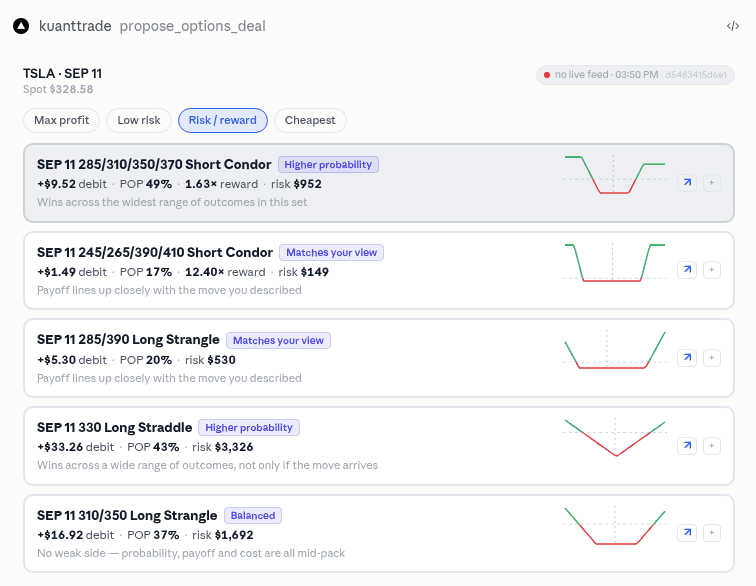
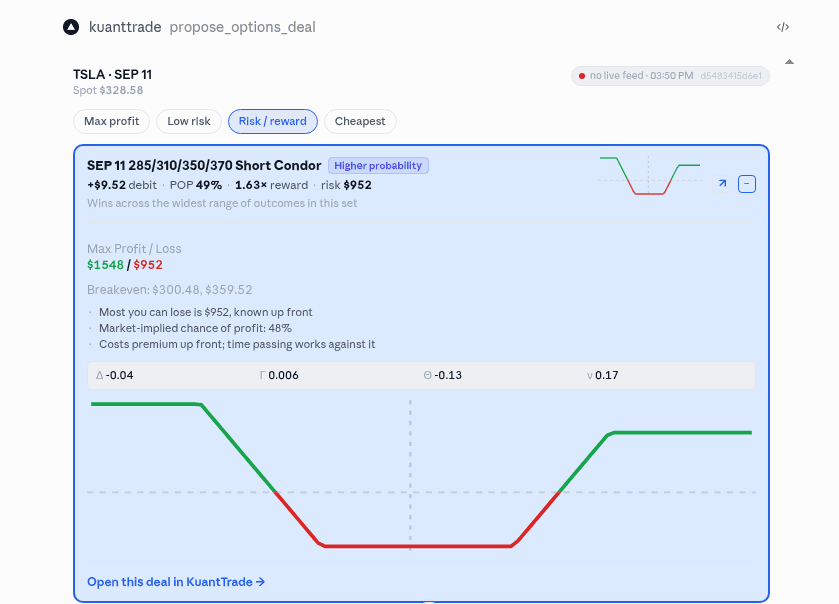
Sorting a catalogue by maximum profit ranks structures by their shape rather than by what you said. These are generated first and scored second, which is why no two reason lines read alike, and why the same set reorders under four lenses: most profit, least risk, best risk to reward, cheapest.
Two ways to build
Unattended and assembled are different lists
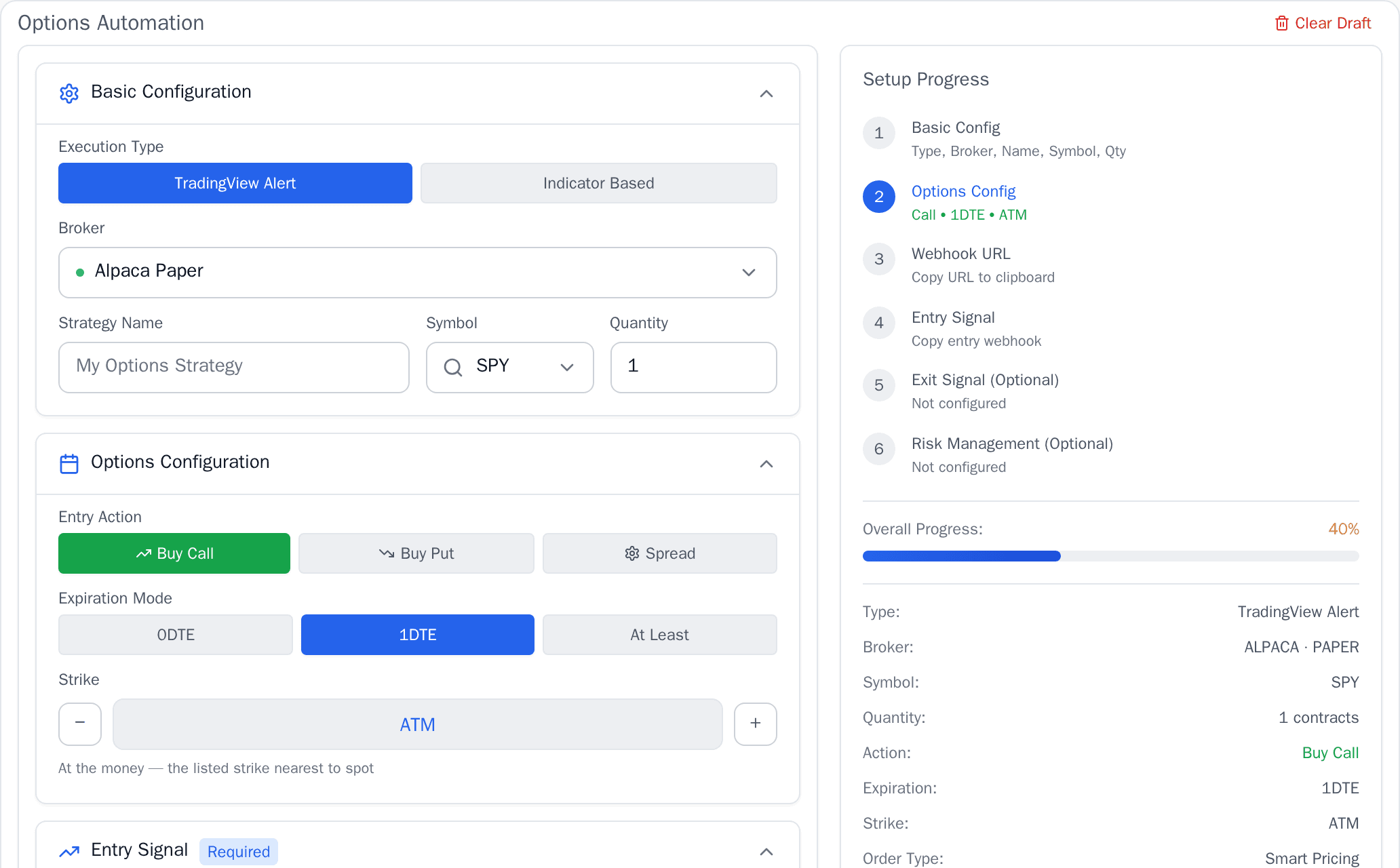
Not a beginner and advanced split. An unattended rule has to derive every leg from a live at-the-money anchor at the moment it fires, and some shapes have no unattended definition.
Runs on its own
5 templatesLegs resolve against the live chain each time the rule fires, so it can run while you are not watching.
Assembled and sent
13 templatesBuilt once in the builder and sent as one order. Calendars and diagonals live here, because a rule cannot derive a second expiry from an anchor.
Only the iron condor is in both, and even the naming differs between them. The identifiers are shown exactly as the platform uses them, so what you read here is what you will see there.
KuantBuilder
The position, priced before you commit to it
Legs, net cost, maximum loss and breakeven, all shown against the chain as it stands. Nothing is sent until you send it.
The badge in the corner is the part worth looking at. When a quote is not live, the screen says so rather than showing a stale number in the same style as a fresh one. A price that lies about its own age is worse than no price.
Questions
What happens if no expiry satisfies my rule?
Nothing opens. The rule does not fall back to the nearest available expiry, because the nearest one is not what you asked for. A position you did not describe is worse than no position.
Why offsets instead of strike prices?
A typed strike is a price that was correct on the day you typed it. An offset from at-the-money keeps meaning the same thing next month, which is the only way an unattended rule stays correct.
What about early assignment?
Assignment and exercise produce real stock positions in your account, and those show up in your positions view. They are broker events, so the broker decides them, and we report what happened rather than predicting it.
Which brokers can trade options?
Whichever of your connections lists them. Crypto venues do not list options and are not offered them here, and the coverage table on the brokers page says which connection covers what.
Can I run this on paper first?
Yes, and you should. Paper accounts run the identical path: same rules, same resolution, same order construction. Only the account it reaches is different.
Write the rule once
Connect a paper account and watch a rule resolve itself against a real chain before you give it anything to risk.