KuantEngine
Rules that run while you are not watching
Write the conditions once. The engine watches the bars, opens the position, protects it, and closes it on your terms, on stocks, options and crypto.
The engine, on screen
A rule you can read, and change.
Not a script, and not a black box with a name. Start from something that already works, move the numbers, and the line above them says exactly what the engine will run.
Playing on its own. Pick a step to take over.
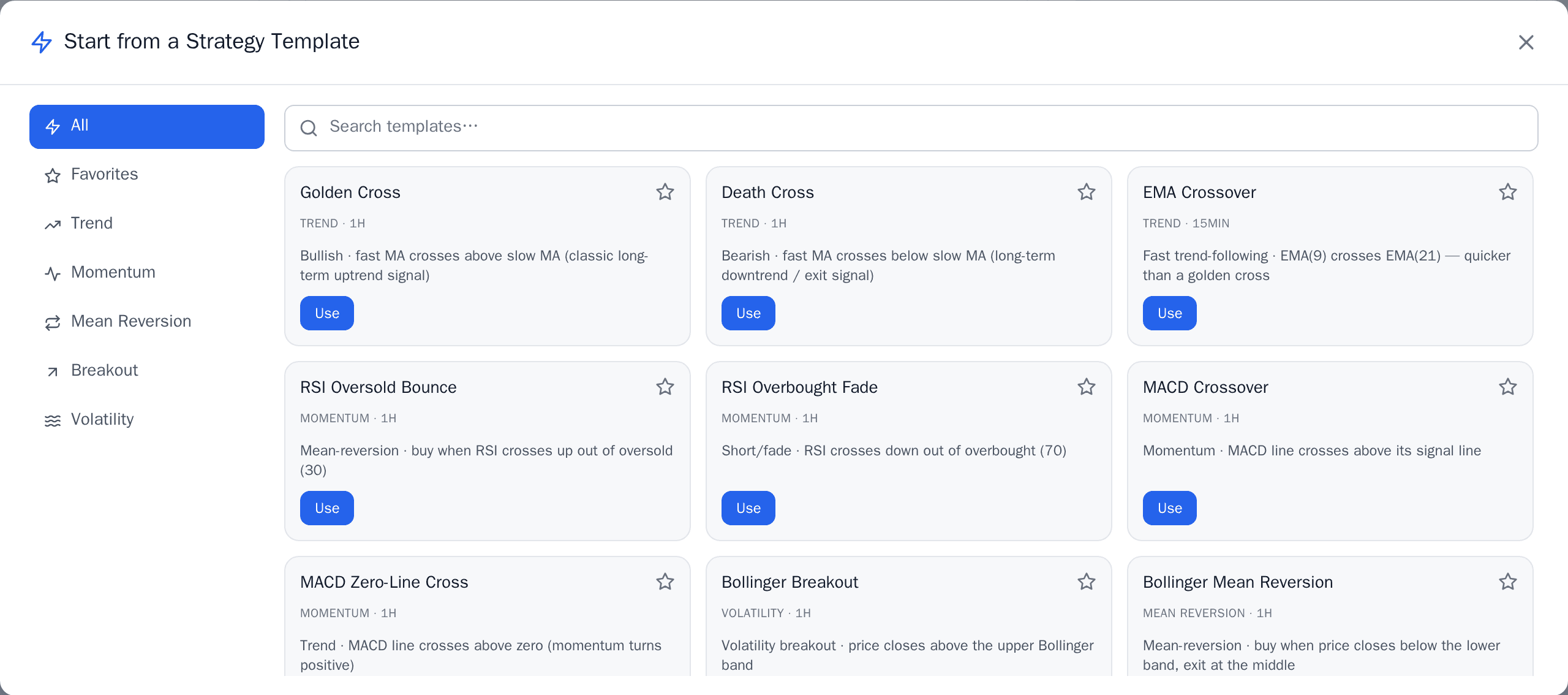
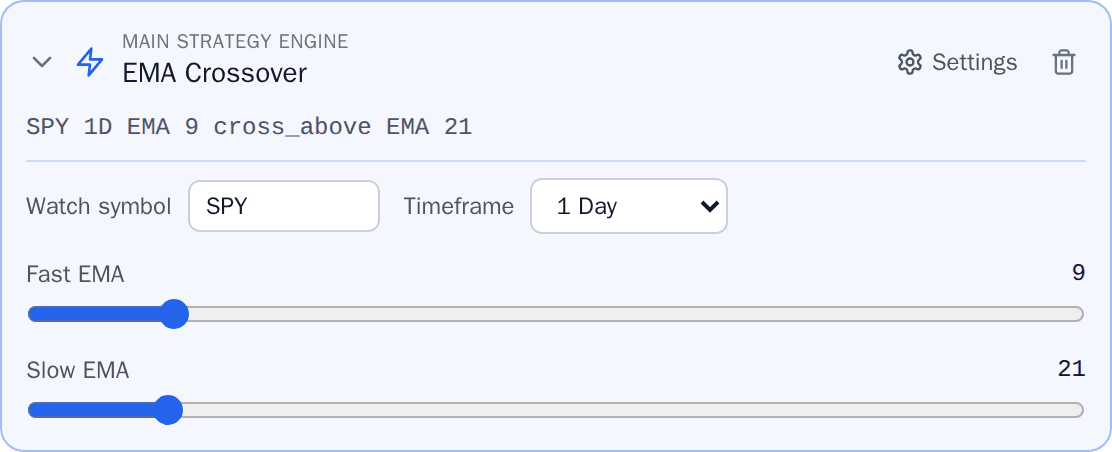
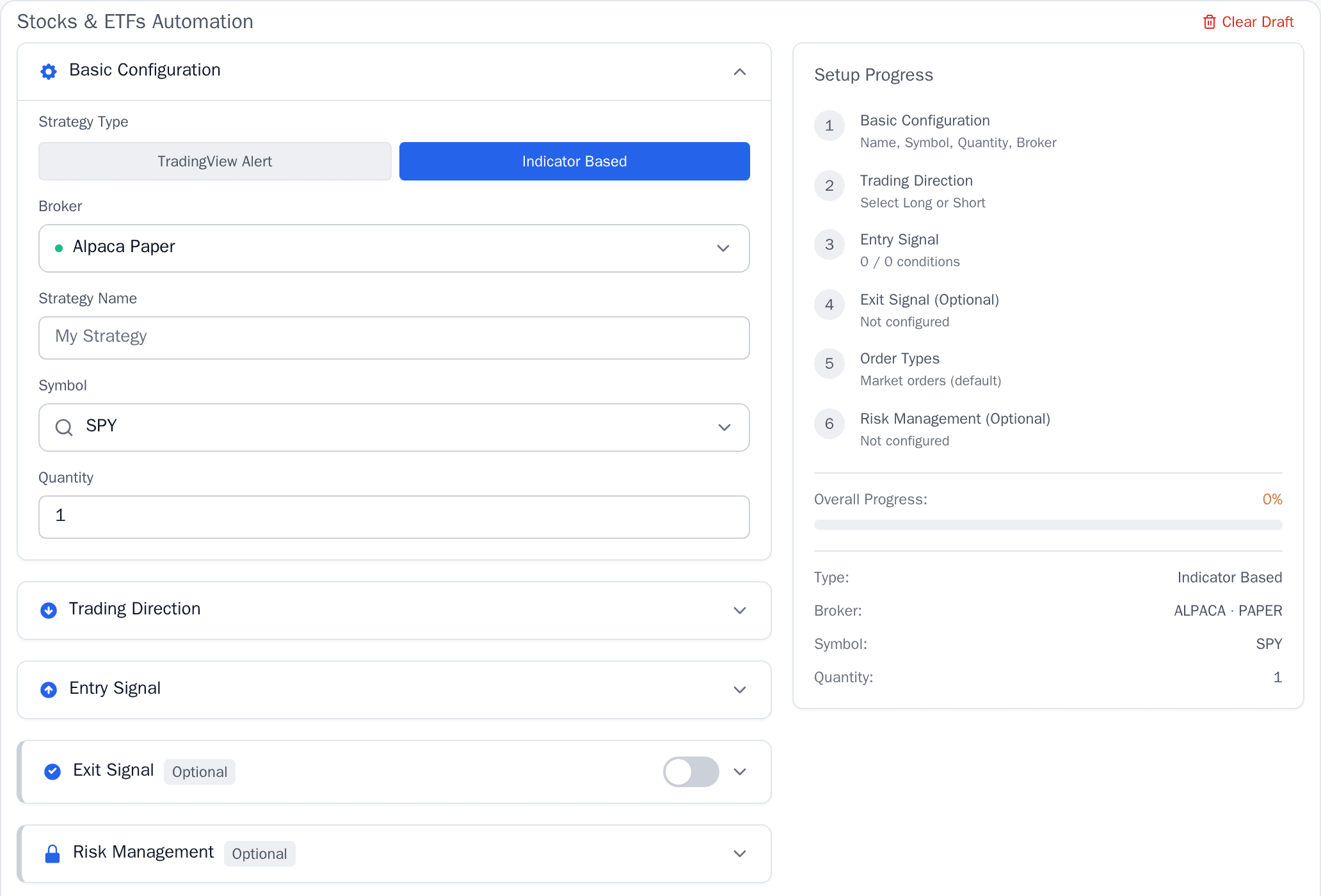
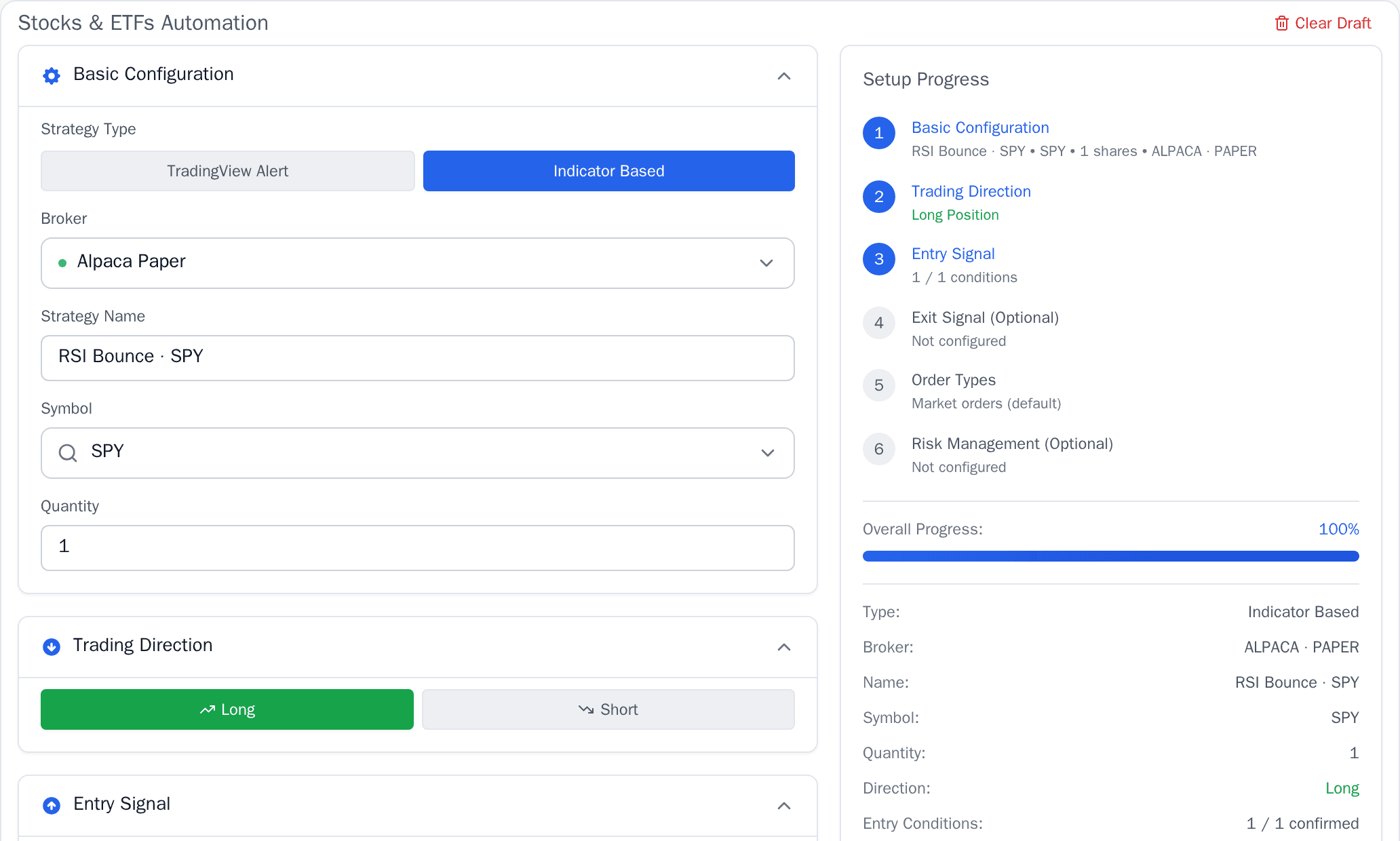
One builder, three markets
The same rule, wherever you trade
Conditions, sizing and risk are written the same way in all three. What changes is what the engine has to decide for you underneath.
Stocks and ETFs
2 connectionsIndicator conditions on the timeframe you choose, with the session gate that stops a rule from firing into a thin pre-market book.
- Trades only in the session you allow
- Market or limit, priced per side
- By quantity, by amount, or by share of the account
Options
2 connectionsA spread is a different kind of rule, not a flag on an ordinary one. Legs resolve against the live chain every time it fires, so nothing is pinned to a date or a strike that ages.
- Same day, next day, or at least N days out
- Strikes as offsets from at-the-money
- Maximum loss known before the position opens
Crypto
3 connectionsThe market never closes, so neither does the rule. Nothing here has to work around an opening bell or a weekend gap.
- Runs around the clock, weekends included
- No market hours to work around
- By quantity, by amount, or by share of the account
The vocabulary
A rule that cannot be evaluated is refused, not accepted quietly
This is the failure that matters in this category, and it makes no sound. An engine that does not recognise an indicator treats the condition as false, so the strategy is created, reports itself active, and never trades.
So the builder only offers what the engine evaluates, and the two lists are checked against each other rather than kept in step by hand. A capability that exists but is not offered is a loss; a capability offered but not real is a strategy that never fires.
After the entry
The part most rules leave out
Opening a position is the easy half. A rule that opens and then waits for you is not automation, it is an alarm clock.
Stop and target are part of the same declaration as the entry, because a strategy that reaches the engine without them is an unprotected position. Time-based exits close what the market never resolved either way.
Watching it run
A rule that has not fired, and the reason it has not
This is the state most of the time, and the state every product in this category is worst at showing. The strategy is reading the market, the condition is named, and the live value sits next to the number it would have to reach.
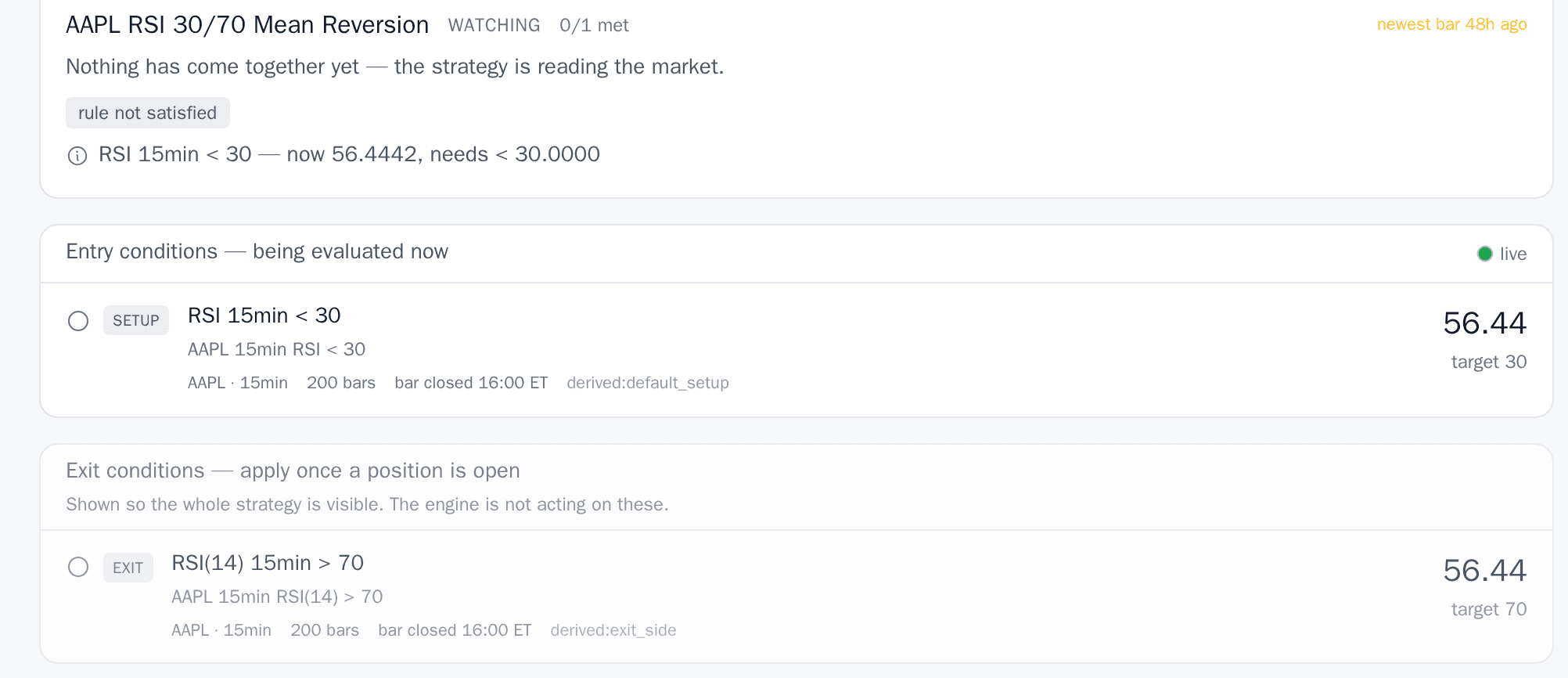

A silent strategy and a broken one look identical from the outside, which is why this screen exists and why it names the condition rather than reporting a status. If nothing is happening you can read why in one line, and the reason is a number against a threshold rather than a colour.
Where a rule can come from
Your own conditions, or a signal from elsewhere
Rules you build here and alerts sent in from outside arrive on separate paths, and the difference is worth knowing rather than hiding.
An incoming alert carries no reasoning we can inspect, so it is treated as an instruction rather than a proposal. What you build here is evaluated against bars we read ourselves.
Questions
What if I ask for something the engine cannot do?
You are told at the point you ask. The condition is refused rather than accepted and quietly evaluated as false forever, which is the failure mode that produces a strategy sitting there looking healthy and doing nothing.
Can I stop a rule from firing outside market hours?
Yes, and for stocks you probably should. Crypto has no session to gate, so the control is not offered there rather than being offered and doing nothing.
Are stops required?
Stop and target belong to the same declaration as the entry. A strategy that reaches the engine without them is an open position with nothing watching the downside, and that is a defect this product has already been bitten by.
Can I send signals from an outside charting tool?
Yes, over a webhook, as entry or exit for either direction. Those arrive as instructions rather than proposals, because an incoming alert carries no reasoning anyone here can check.
Can I run a rule on paper first?
Yes, and the path is identical: same evaluation, same order construction, same lifecycle. Only the account it reaches is different.
Write one rule
Connect a paper account, build a rule, and watch it manage a position from entry to exit before it gets anything real.